
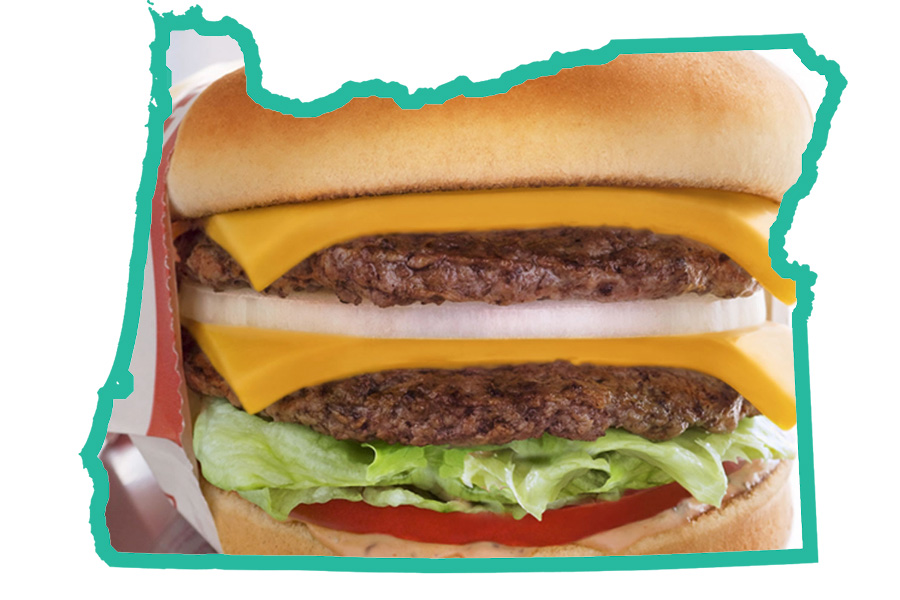
With a new suburban location planned, the popular drive-through inches closer to Portland.
It’s looking like a popular red, white and yellow California drive-through chain is finally coming to the Portland area with a proposed location in Washington County.
The Oregonian reported on a recently revived plan to build an In-N-Out Burger in Beaverton.
On April 16, an independent hearings officer issued conditional approval for an In-N-Out at 10565 Beaverton Hillsdale Highway. The plan was initially denied in 2022 due to a zoning issue, the project complicated by the fact it’s located in two different land-use zones, only one of which allows a drive-through.
Approval of the project is now contingent on In-N-Out satisfying several land-use conditions including providing detailed plans for erosion control and storm drainage.
Once construction begins, an In-N-Out restaurant typically takes eight to nine months to build and come online, according to a statement by the company.
It would be the fifth Oregon location for a burger chain that’s been methodical and, to some Pacific Northwesterners, evasive in its expansion.
Founded in Irvine, Calif., in 1948, In-N-Out was California’s first drive-through hamburger stand. Through decades of rapid growth, the family-owned chain resisted franchising or going public.

Its intensely loyal fanbase supports around 400 locations primarily in California though the chain has begun to expand to other western states including Nevada, Arizona and Texas. The siting of new restaurants is subject to intense scrutiny and grand openings often see cars lined up back to the highway.
In-N-Out opened its first Oregon location in Medford in 2015, following that up in 2017 with one in Grants Pass and another in Keizer in 2019. It next dropped down to Roseburg to open a restaurant in 2022.
Some Portlanders were alarmed when plans were revealed showing In-N-Out would bypass the city and open a location in Clark County, its first in Washington. That restaurant will be in Ridgefield: near Interstate 5 about 15 miles north of downtown Vancouver, The Columbian was first to report in February.
Much of the blame for In-N-Out’s absence lies with Portland, or at least, Portland-area governments, as Portland Monthly explained this week. A planned location in Tualatin fizzled in 2020 when In-N-Out’s application expired without a decision. And a 2021 effort to bring an In-N-Out to Hillsboro stalled after receiving pushback from residents.
For the moment, Portlanders can take solace knowing they have a Raising Cane’s while Seattle does not. (A Raising Cane’s is scheduled to open in Seattle in 2025.)
Click here to subscribe to Oregon Business.