
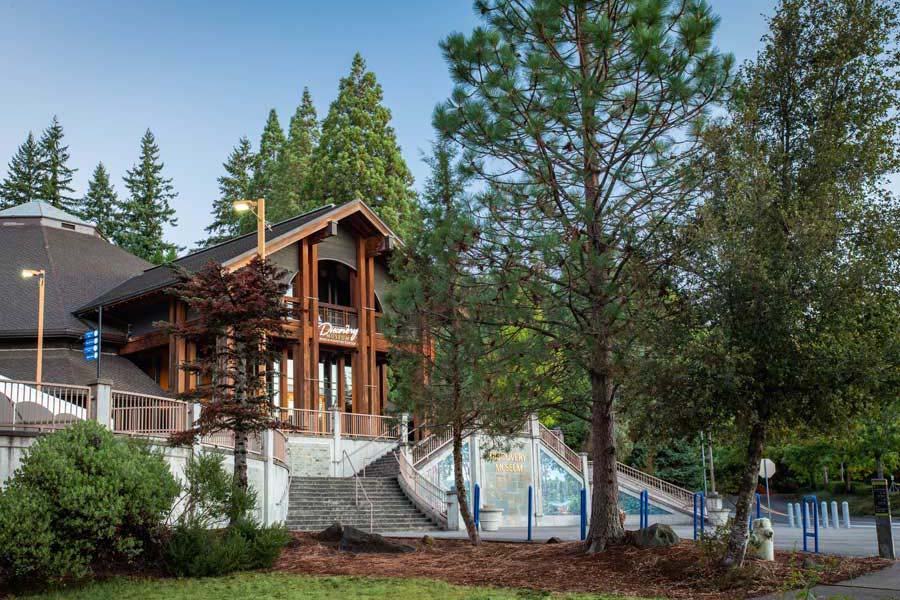
Project will reimagine one of the most heavily used arrival points in Washington Park as a welcoming gateway to nature for visitors, neighbors and transit riders.
World Forestry Center has been awarded a $2 million grant through Metro’s Nature in Neighborhoods program to transform a highly paved arrival area into a restored, accessible, and community-centered space on World Forestry Center’s Washington Park campus located in one of the largest urban parks in the world.
The project is a key step in the organization’s broader campus transformation, reimagining one of the most heavily used arrival points in Washington Park as a welcoming gateway for visitors, neighbors, and transit riders alike. Originally a more natural part of its campus, the plaza was heavily shaped by the construction of the Washington Park MAX station, which resulted in an increasingly more paved and disconnected multi-use space rather than the welcoming gateway to nature.
“This investment allows us to rethink how people arrive, gather, and connect—to each other and to nature, especially our forests,” said Joseph Furia, Executive Director of World Forestry Center. “We’re creating a space that is not only more sustainable, but more open, more welcoming, and more reflective of our approach to connecting communities to forests.”
At the heart of the project is a revitalized plaza designed as a flexible gathering space. The redesigned upper and lower plazas will create a more welcoming arrival experience while supporting community use, cultural events, educational programming, and informal gathering. The project builds on years of community engagement with residents, educators, artists, Tribal advisors, and community partners to reimagine how the campus can better support connection, learning, and gathering.
The space will feature native plantings and ecological restoration that reconnect visitors with the surrounding forest landscape, along with a new mass timber pavilion that will provide year-round shade, shelter, and a place for gathering while showcasing the beauty, innovation, and versatility of wood.
The project will strengthen World Forestry Center’s role as a gateway between the city and the forest by improving connections to the surrounding landscape, including reconnecting the campus to Forest Park’s Marquam Trail. Located at a key junction of Max station, shuttle stops, parking areas, and trail systems, the project will restore and formalize this 200-foot trail connection, improving safety, reducing erosion, and creating a clearer transit-to-trail experience for visitors and park-goers alike.
In addition to improving access and connectivity, the project will significantly enhance ecological conditions on site.
Together, these improvements will transform a fragmented, concrete-dominated space into a vibrant plaza and forest gateway, one that reflects World Forestry Center’s mission of connecting people with forests while creating a more welcoming and accessible experience for the broader community.
Early-stage designs and planning will continue in preparation for permitting and construction, with a target completion date of 2028.
Learn more about World Forestry Center at worldforestry.org.