
 Leaders and innovators across the state weigh in on the future of Oregon business.
By Jon Bell, Oakley Brooks, Susan G. Hauser, Brian Libby and Jennifer Margulis
Leaders and innovators across the state weigh in on the future of Oregon business.
Teach the childrenTim Boyle, President and CEO Fix Oregon’s education system — and the Interstate bridge bottleneck — and the business picture in the Beaver State will brighten quite a few shades in the next three decades, says Boyle, who famously moved his family’s business from Portland to the friendlier business climes of Beaverton in 2001. Otherwise, there won’t be much to attract new businesses to the state. “The reason that we’re here and that Nike is here is very serendipitous,” he says. “It’s because we grew up here, not because we sought out the best business climate. You can’t take for granted that that will continue.” |  |
 | Power to the rural peoplePat Reiten, President and CEO Pacific Power may be headquartered in the urban heart of Oregon, but it serves customers in 31 of 36 counties across the state, including many of the rural corners. And that — along with fixes to the state’s tax system and with electric utilities playing a larger role in powering Oregon’s transportation sector — is where Reiten sees a key piece to Oregon’s success in the coming 30 years. “Great rural leaders will create new jobs,” he says, “and industries outside of the urban core and good infrastructure investments will help make that happen.” |
The Austin methodJim Piro, President and CEO If Portland, Oregon, becomes a little more like Austin, Texas, over the next 30 years, Piro thinks the business climate here will be in much better shape. He points to the Texas city as a fine example of one that has banded together — public officials, private businesses and the university system — in a concentrated effort to create new jobs while bolstering existing businesses at the same time. “That’s the kind of environment we want here,” he says, “where you bring business and the education and government systems together to create a common voice to attract businesses.” | 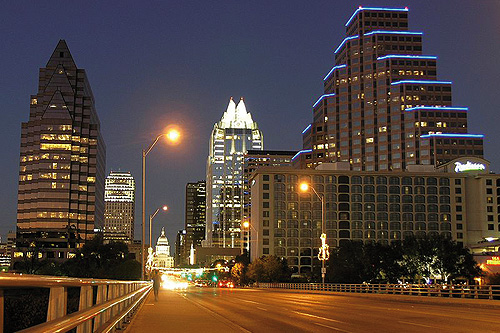 |
 | Better PartnershipsJohn Kitzhaber, Governor Thirty years ago, Kitzhaber was a state senator facing a recession deeper than the one Oregon is in now. The state dug its way out of that hole in part by intentionally focusing on attracting and growing high-tech companies. For a solid future, he believes Oregon must now take a similar approach and focus on natural resource and traded-sector companies; not just attracting or growing them, but on making sure the capital they generate stays in Oregon. “The state first and foremost needs to be a partner in these efforts,” he says. “I think if the state can create a clear and predictable regulatory environment that encourages reinvestment in the state of Oregon, I think we’ll have a bright economic future.” |
One word — exportsTamara Lundgren, President and CEO Looking out 30 years, Lundgren sees one key to Oregon’s business future: exports. It will be exports, not consumer spending, that drive the economy, and the large manufacturers that focus on exports will in turn support and grow smaller businesses in Oregon. “In an ideal world,” she says, “Oregon would become a diversified export powerhouse that moves beyond our traditional boom-and-bust economy to a more secure future.” | 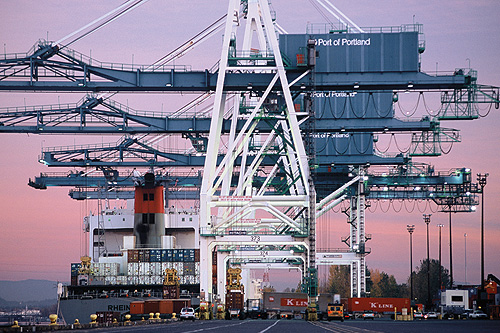 |
 | K-12 is the keyAllyn Ford, President and CEO Ford leads one of the largest private lumber companies in the country, but as a member of the Oregon Board of Higher Education, his focus is on education. “There’s a lot of emphasis on higher education,” he says, “but K-12 is the basic structure for all our education. We’ve got to get on our feet and focus on the basics.” What’s been holding Oregon back is mediocrity, says Ford. “We have to get busy and start focusing on excellence.” |
An educational hubLarry Miller, President Miller, who left Nike to lead the Trail Blazers, the state’s top sports franchise, sees an advantage in Oregon’s ability to attract a creative workforce. Yet we have traditionally lacked a major top-tier academic institution in Oregon’s largest city. “I think the evolution of Portland State University could play a major role here,” Miller says. “And expanding the University of Oregon’s presence is beneficial, too. But growing the college and university dynamic is what will feed those jobs.” |  |
 | Garbage powerMark Edlen, CEO Gerding Edlen is the most successful green-building developer in the United States, having developed more LEED-rated square footage than any other company. Unsurprisingly, sustainability and energy frame Edlen’s future vision. “The holy grail I think for us is trash to energy,” he says. “Renewable energy is already a foregone conclusion. But the notion of taking garbage and converting it into energy at a city level will be the wave of the future.” |
Perennial pioneeringDan Wieden, Co-founder Wieden sees value in Oregon’s trail-blazing identity. “In China they say now that every three years is a new generation,” he says. “Being that adaptable and nimble is probably the biggest challenge for this country and the Northwest.” Because Portland is still a relatively young city it’s still kind of trying to find itself. I love the fact that it’s more spontaneous here. If we see that as our major asset, the future should be quite bright.” |  |
 | Info even fasterCharles A. Wilhoite, Managing director Sitting on boards of the Portland Development Commission and OHSU, Wilhoite sees smarter bureaucracies sharing information efficiently and quickly. “Technology’s going to affect everything that goes on around the world,” he says. “I heard someone speak at a conference about having a medical chip on your person. You get injured in another city, they can access that. But the issue is privacy. There are always some risks.” |
Opportunity knocksWally Van Valkenburg, Managing partner “I think it’s part of the DNA of Oregonians,” says Van Valkenburg, a member of the Oregon Innovation Council. “Maybe it comes out of the pioneer experience where you had to work together to survive. But even compared to Seattle, there’s more collaboration here.” An essential component, he believes, is the social and economic opportunity. “We have very little aristocracy compared to the East Coast,” he says. “People who have talent and ambition don’t have the same barriers.” |  |
 | Back to the forestMike Rondeau, CEO Rondeau, who overseas the tribe’s growing covey of business operations, looks toward the forests for the future. “I do believe we can make forest restoration into an income generator for the state and something that will draw people here to our area and create employment.” The other influx he expects? Asian-American and even international tourists from around the Pacific. Overseas tourists are next. “As soon as we can show the world what the state and Southern Oregon have to offer, they’ll be here.” |
The green edgeBryan DeBoer, President and COO Oregon doesn’t have the population or economic base that California does, and it may be easier for DeBoer to run his family’s car dealership business in other states, but Oregon’s got the edge in something else: sustainability. Cast aside the budget shortfalls and the high capital gains and income taxes, and it may just be Oregon’s commitment to sustainability and green technology that bolsters its business climate over the next 30 years. “Oregon’s right where it needs to be,” DeBoer says. “It’s costly to be there right now, but maybe someday sustainability will be what draws people here for business.” |  |
 | Creative corridorJohn Jay, Global executive creative director Jay sees the future turning on Portland’s ability to nurture creative ventures as part of an ecosystem. The foundations of this “Creative Corridor” are already visible in the Pearl District, with firms like Wieden+Kennedy and Ziba, the Pacific Northwest College of Art and the Craft Museum, and Old Town’s eclectic creative mix of artists, shops, and architecture and design firms. “It’s a loosely held group of friends today,” Jay says. “But in the future, the potential of the Creative Corridor, if curated, connected and supported by the right leadership and vision, could make it one of the most influential creative neighborhoods in the world, with the potential sharing of information through existing networks around the globe. Thinking and dreaming big used to suffer from the ‘tall poppies’ syndrome in this city. Moving forward: It is the cost of entry.” |
Keeping the juiceSohrab Vossoughi, President and chief creative director Even if state institutions continue to suffer and erode the quality of life here, Vossoughi says it will be hard to drain Portland of its creative juices. “The reason Portland is unique is that its DNA, reflected in the values, behaviors and attitudes of people who choose to live here and make up its culture, is in line with the things that creative people like: independent thinking, a craft mentality, a love of experimentation and collaboration, and a balance between urban and wild. I believe Portland will continue to capture entrepreneurs and creatives for at least another generation.” |  |
 | Seizing market leadershipDave Chen, Chair Oregon has long been a leader in eco-friendly ideas but is still figuring out how to export them for large financial gain. Chen, a principal at Equilibrium Capital Group, still believes the opportunity is ripe. But we’ll have to somehow match our love of startups with a new affinity for growing large, foundational companies like Intel or Iberdrola, which, it should be noted, were founded elsewhere. “Our biggest challenge,” he says, “is that Oregon likes to be a pioneer but it shies away from being a market leader. We like to be first but we are very uncomfortable with making it pay. To do that, everyone from industry leaders to elected officials needs to recognize the economic engine that results from market leadership, and then be willing to lead us there.” |
Be the deciderRyan Deckert, President Deckert, the former state senator who has led the OBA since fall 2007, likes what he sees in Oregon’s ability to make timely decisions that reap future benefits. A good example, he says, is alternative energy. “It’s not by coincidence that more solar manufacturing and wind development is occurring in Oregon than in any other state in the nation,” he says, noting that good and prompt decisions also helped put advanced manufacturing and footwear in the lead. |  |
 | Come together, right nowMark Ganz, President and CEO It’s always big news when a headquarters company leaves Oregon. But so far, the $10 billion not-for-profit Regence BlueCross and BlueShield of Oregon has stayed. To keep Regence and others here over the next 30 years, Ganz says public entities and private industry need to work together — as they have through Greenlight Greater Portland, which Ganz chairs — stop throwing Band-Aids at Oregon’s social ills and focus on creating the jobs people need to live their lives. “We have a huge opportunity and need to unify our efforts,” he says. “If we don’t, I think we’ll be disappointed 30 years out.” |
Strengthened linksGreg Ness, President and CEO Heading a century-old Portland company, Greg Ness is looking forward to a prosperous Oregon economy, with the state’s coffers full, thanks to the success of Oregon companies in the marketplace. “It’s achievable, but will require re-establishing the connection between the prosperity of Oregon’s private sector and the prosperity of our communities and state.” |  |
 | An agriculture revolutionSusan Sokol Blosser, Founder “I predict a revitalization of agriculture, which is already happening,” says Sokol Blosser, who has noticed that agriculture is becoming more localized, and that younger people are going into farming, using sustainable or organic practices. “People are going to farmers’ markets, restaurants are buying from farmers, and schools will be buying directly from local farmers soon too.” She predicts ancillary businesses growing up around sustainable agriculture: agri-tourism, bike tours, bird watching, and family recreation. “Small-scale, profitable agriculture with no middleman builds a sense of community. With more sustainable agriculture on the horizon, we’ve got a win, win, win for our state.” |
“Semper Gumby”Wayne Drinkward, President and CEO As president of the largest general contractor in the Pacific Northwest, Wayne Drinkward is always ready for anything, including the dramatic shift in business models that he predicts. The tongue-in-cheek company motto is “Semper Gumby” (Always Flexible), so Hoffman will likely be prepared if indeed Oregon comes to emulate Europe with bigger, more specialized and more regulated companies. “People who can work within that environment are going to be OK.” |  |
 | The innovation solutionTim McCabe, Director McCabe is particularly enthusiastic about the results of his department’s Oregon Innovation Council. He cites the successes and the significant financial return of the three research centers (ONAMI, BEST, OTRADI) established and funded by the council, which in turn have resulted in new industries. “For every dollar we’ve invested as a state we’ve generated $7 in additional funds to continue this research,” he says. “So I think the key to our economy is innovation.” |
The capital keyLinda Weston, President and executive director “There’s no lack of innovation in our state and the glass is always half full for me — in some cases it’s really full,” says Weston. She cites more angel investment from private individuals now than has been the case in Oregon, and more venture investment. “What I hope to see in the next 30 years is that emerging companies get even more access to all kinds of capital. I hope that Oregon is going to become headquarters to more than a dozen homegrown — with an emphasis on the homegrown — Fortune 500 companies.” |  |
 | The energy shiftGordon Brinser, President of operations “Energy is going to drive the next 30 years,” says Brinser. “We will have to come to grips with where we’re going to get our energy, its impact on our climate and ultimately the way we live.” He sees Oregon at the forefront of the shift in terms of innovations in conservation and renewables, but thinks that Oregon must quickly position itself to lead this transition. “Everything will come down to how we manage the shift — transmission, transportation, the smart grid, conservation and renewables — as we go forward.” |
Local controlJay Clemens, President and CEO Clemens heads Oregon’s largest business organization, whose members range from small businesses to global corporations. But the state as a whole will prosper if Oregonians “take our eyes off uncertainties of the global marketplace and put our energy into the things we can control,” he says. Those things include educating, training and attracting the best and the brightest to our state. | |
 | Focus on the long viewPreston Pulliams, President “It’s critical that our Oregon businesses find the resources to achieve environmental sustainability — in their transportation policies, buildings and facilities, and even employee work and personal choices — in the next 30 years,” says Pulliams. He also looks for businesses to strategically focus on long-term returns instead of short-term gains and for Oregon businesses to engage those employees who deliver products and services. “This engagement will produce a more committed workforce and simultaneously strengthen employee morale and this in turn strengthens the bottom line. As the saying goes, ‘There is no ‘I’ in team.’” |
Going globalWilliam D. Thorndike Jr., President and CEO Thorndike predicts that businesses that we already do well in Oregon — like education and health — will enjoy continued success, while other sectors will remain involved in international trade by providing the elements that Oregon businesses can design and manufacture — like athletic wear and gear. But he cautions that successful Oregon companies will understand the need to be part of a bigger system. “This is part of a natural evolution,” Thorndike says. “For Oregon businesses to deal with the increasingly global economy we need to become part of that economy.” |  |
 | A resources renaissanceDuncan Wyse, President In the past, Oregon’s natural resources, including forestry and agriculture, played a much larger role in fueling the economy than they do these days. But Wyse thinks a renaissance — not a return to old ways — is in the works. “In the last 20 years, we’ve really underplayed our resources,” he says, referring to everything from foods grown here to timber for specialty wood products and biomass energy. “We need to realize that these are renewable resources that can be managed sustainably to create economic value and sustain our quality of life.” |
Working togetherSabrina Parsons, CEO The big picture for Parsons is that what’s good for the state of Oregon is good for its businesses, and that businesses can help find solutions for Oregon in turn. “There’s great potential for Oregon to become an entrepreneurial hotbed like Silicon Valley in California or Research Triangle Park in North Carolina, but in a way that makes sense for Oregon,” says Parsons, whose company, Palo Alto Software, is based in Eugene. “There’s a lot of potential for Oregon business if we plan it together and if business leaders are active and involved.” |  |
 | Healthier banksMalia Wasson, President Wasson sees a future without nationwide financial meltdown. Citing the Dodd-Frank Act, America’s most sweeping financial overhaul since the 1930s, Wasson says: “Thirty years from now banks will be able to absorb significant shock, much more so than many were able to withstand in the recent crisis. Higher capital requirements, stronger underwriting standards and procedures, and transparent financial disclosures will be commonplace and will result in much healthier banks.” Wasson also favors financial education in public schools. |
| {artsexylightbox singleImage=”images/stories/articles/archive/jan2011/slideshow-intro-30YearGraphs.jpg” path=”images/stories/articles/archive/jan2011/30YearGraphs”}{/artsexylightbox} |