

The retail mix fix

Pearl District developers look to the retail success of the Brewery Blocks for north-end inspiration.

By Brian Libby

{safe_alt_text}
The Fremont Bridge frames the Pearl’s north end. Photo by Brian Libby.

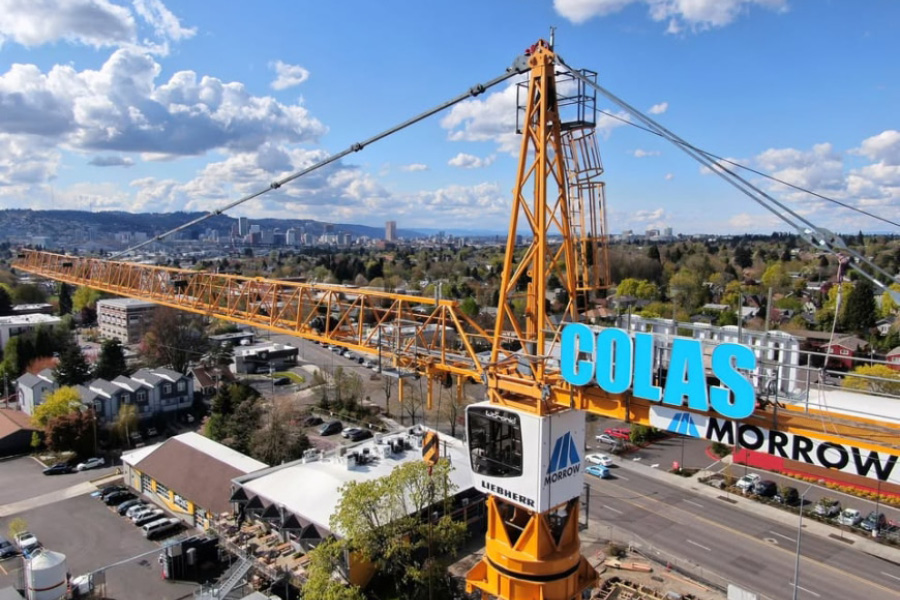
As the largest developer in Portland’s burgeoning Pearl District, Hoyt Street Properties has built a succession of high-rise condominiums that have helped transform this once sleepy industrial enclave north of downtown into a national model for urban renewal: the city reborn. But one look at the Hoyt Street conference room, where maps and architectural renderings are pinned to every available wall, and it’s clear the Pearl’s omnipresent construction cranes won’t be leaving anytime soon. “Some of the most important things we do are still to come,” says Hoyt Street president Tiffany Sweitzer.

The developer is currently planning the blocks that will form the Pearl District’s northern edge, next to the picturesque Fremont Bridge and the Willamette River. There are to be glassy condominiums, a new park and, if all goes according to plan, a cluster of shops and restaurants that will make the development a destination for more than just residents.

{safe_alt_text}
The Henry helps anchor the thriving Brewery Blocks area. Photo by Brian Libby.

It’s that last part that is particularly crucial. The Pearl District largely has been a retail success, with a blend of art galleries, gourmet restaurants and furniture stores filling out the neighborhood over the past decade. But there remain significant challenges. Pearl retailers face increasingly fierce competition from popular suburban “lifestyle center” shopping areas such as Tualatin’s Bridgeport Village and Hillsboro’s Streets of Tanasbourne (see related story, p. 5). These suburban shopping areas also point to the Pearl’s Achilles heel: For all its individual retail successes, the district lacks a central pedestrian spine that can concentrate enough shoppers to collectively generate retail synergy.

The Pearl’s greatest retail success has been at the five-building Brewery Blocks development, where a steady stream of pedestrians patronize businesses such as grocer Whole Foods, furniture chain West Elm, and the adjacent Powell’s Books. But that same critical mass of shoppers hasn’t been replicated elsewhere in the district.

“The neighborhood needs that bookend,” says Portland city planning director Gil Kelly. “The Brewery Blocks lit up the landscape a few years ago, and we need that same mix of residential, retail and housing at the Fremont Bridge. And part of the puzzle for us is how you make the connections between them.” Kelly says Northwest 13th Street could become the Pearl’s new Main Street if there were a sense of momentum carrying people from one end to the other.

Sweitzer and Hoyt Street Properties hope their new development at the Pearl’s northern edge will create that coveted Brewery Blocks bookend and help articulate a pedestrian thoroughfare between them. The developer has been working with Portland’s BOORA Architects to design not just a cluster of condos and a park, but something more indefinable, too: a destination.

“With the park and the river and the connections to the bridge, this area could be really special,” says BOORA principal John Meadows. “It’s trying to see if there are ways to have it clearly still be an economic success for the developers but to find opportunities to make stronger public rooms. Even if it’s dense and built out, it’s sort of like, ‘Why would people go there other than to sleep?’ You could probably sell housing for a long time there. Are there ways to make it more of an anchor here at the Pearl’s north end like the Brewery Blocks is at the south end?”

Undeveloped parcels in the North Pearl
{safe_alt_text}


The “public rooms” Meadows speaks of are public areas where people enjoy congregating. The aforementioned park planned for near NW 11th and Overton, where the Pearl abuts the Fremont Bridge, Naito Parkway and the nearby riverfront, will provide an athletic field for playing Frisbee or tossing your dog a bone (and also preserves views of the bridge by not putting more condos there). But that’s just a start. BOORA envisions a European-style plaza where pedestrians, diners at outdoor cafés and slow-moving cars share cobblestone streets together. The architect and Hoyt Street Properties hope this kind of environment can invigorate retail investment here that attracts more than residents.

“The ugly truth of this is, if you don’t have business and things happening during the day, you can’t have a vital, ground-level retail experience,” says Patricia Gardner of the Pearl District Neighborhood Association. “It just cannot be supported by the residential only.”

For Hoyt Street Properties, this northern terminus for the Pearl will also represent the culmination of all that the developer has learned in building nearly 3,000 units of housing in less than a decade and a half. “I can’t stress enough that there’s a learning curve of not only the architecture and how something sits on a block, but everything that has to fall into place to make it work,” Sweitzer says. “It’s open spaces, it’s how the transit works. It’s the differentiation of architecture but also the unit sizes, and between rental and affordable. When people walk down there, they say, ‘How did all this come together?’ Well, it was a series of things. But looking at the remainder of the property you think about how it all starts to come together.”

Still, the Pearl remains attractive to retailers, who like the idea of customers living right above them in the countless condos that have shot up here over the last decade.

{safe_alt_text}
In 2004, REI took a risk in putting its flagship store in the Pearl’s north end, below the Edge Lofts.  REI says today it is a huge success. Photo courtesy of GBD Architects.

Take REI, the popular retailer of outdoor gear, which moved its flagship Portland store two years ago from the big-box retail environment of the Jantzen Beach shopping center to the ground floor of the new Edge Lofts in the Pearl. The company viewed it as a substantial risk, says REI operations manager Brian Bate.

But the risk paid off. “It’s a hugely successful store,” Bate explains. “Our first year we saw a 30% increase over what we were doing out at Jantzen Beach. It’s a demographic bull’s-eye for our members. People used to have to fight the traffic out on I-5 to get to REI. We’d be slow from about 3:30 to 7 p.m. every weekday because of traffic. Now, for a lot of them, we’re at their doorstep.”


Brian Libby is a Portland writer whose work on architecture, arts and other topics has appeared in The New York Times, The Oregonian, Premiere and Dwell. He also writes the local blog “Portland Architecture.”


Have an opinion? E-mail feedback@oregonbusiness.com

Current Issue | NOV 08

  • State of addiction
    Oregon increasingly relies on its lottery to fund crucial programs. When, not if, the lottery maxes out, what will it mean for the state’s future?  MORE >

  • Pollution for sale Ready or not, The carbon market is coming to Oregon. Expect big winners — and big losers.
  • The Adams doctrine Portland's mayor-to-be offers a sneak preview of his economic plan, short on strategy but long on hope.
  • City U PSU gets a new president who’s an expert in urban development, right as its community is making big plans.
  • Economist Joe Cortright: "Fasten your seatbelts" YOU REMEMBER THE FEELING from when you were a kid: Just past the top of the highest point of the track, the roller-coaster car falls away, taking the pit of your stomach with it.

Around the State

Lien times hit construction
The steep hillside overlooking the Willamette River is a Portland residential community without residents.

Looking for a pony payday
It’s two minutes before post time for the first horse race of the season at Portland Meadows and the odds to win seem more favorable than betting on Wall Street.

Tight times benefit grocery stores
The economic slowdown hasn’t kept grocery-store carts from rolling.

No surprise: credit squeeze hits home
Small businesses throughout Oregon that rely on credit to keep operations going may find unwilling lenders as the economy worsens.

Graphic: Oregon sees modest bump in restaurant jobs

View all Around the State >


Advertisement | Advertising


Biz Life

Tactics: The tracker
We don’t know who you are, but we know what you are watching.

Next: Molecular glue for your lens
It’s fitting that a new technology so tiny it can’t be seen by the naked eye is being used to build a better contact lens.

Former tech CEO pedals into a new job
WHEN KYLE RANSON resigned from a faltering InFocus in 2007 after three years at the Wilsonville projector company’s helm, it seemed only logical that the 20-year tech veteran would soldier on in the field he knew best.

Philanthropy: How to still do good when times are bad
THE ECONOMY IS IN shambles, the end of the year’s approaching and you’re just now thinking about having your business make some sweeping philanthropic gesture.

View all Biz Life >


Lists

Deal Watch: David Evans gets $250 million

Statewide ranking of health plans

View all Lists >


From The Editor

Naked came the shorts
I’VE BUILT THIS MONTH’S column out of a house of cards and it’s only a matter of time before the bubble bursts.

View all Editorials >


Feedback

The worry index
Readers rate their top concerns

View all Feedback >